
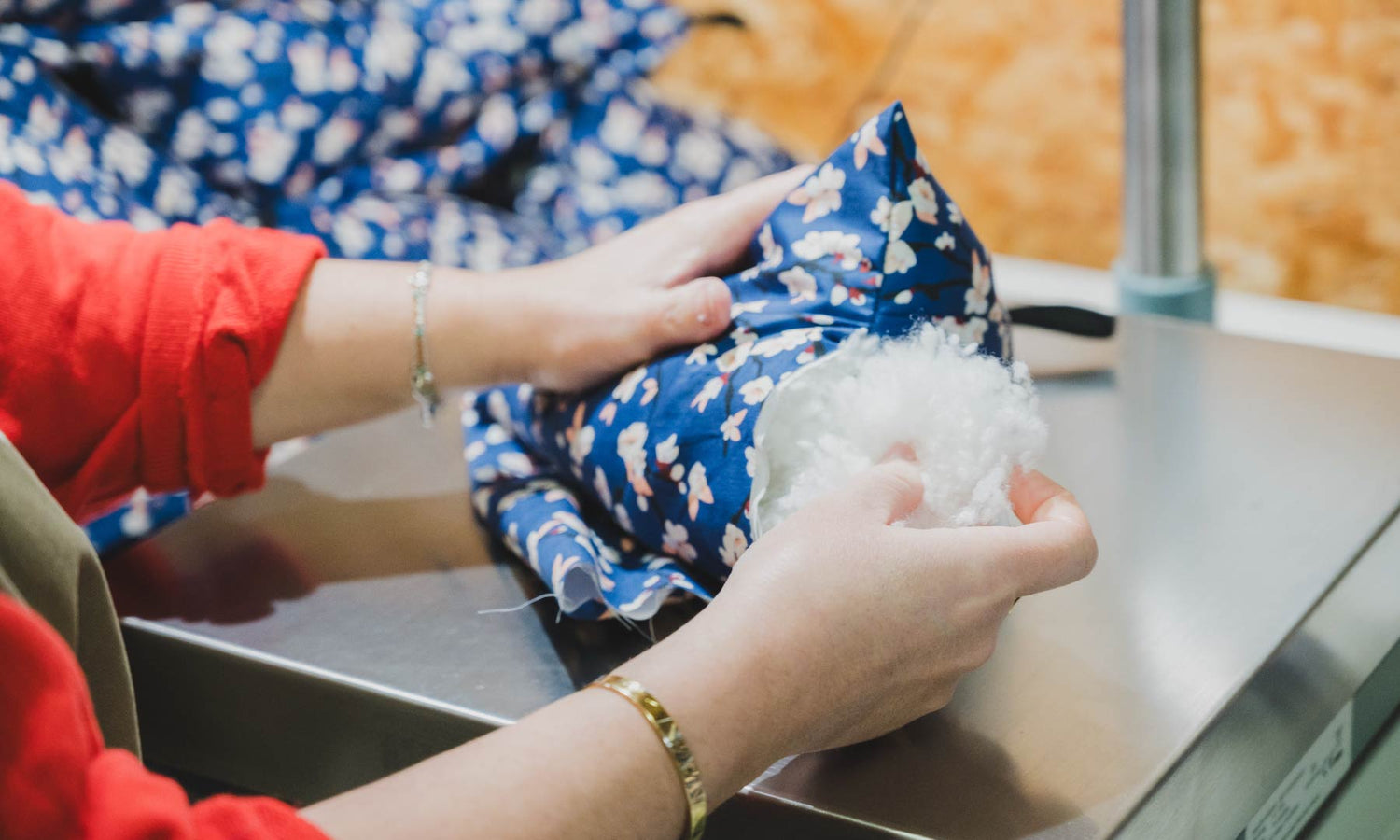
To mark International Whale Day , we wanted to answer a simple question many people ask: what exactly happens to recycled plastic? In our company, it becomes the fiber that fills our cushions. A soft, durable material made from recycled plastic bottles, which helps reduce waste in the oceans and protect marine life. We'll explain everything.
Plastic in the oceans: an issue that concerns us all
Every year, millions of tons of plastic end up in the oceans. Bottles, packaging, microplastics… This waste breaks down, travels with the currents and directly threatens marine biodiversity.
Whales, symbols of this international day, are particularly affected. They can ingest plastic waste while filtering water or mistaking fragments for food. The result: blockages, poisoning, internal injuries… Plastic in the oceans is not an abstraction; it is a dramatic reality for marine wildlife.
Speaking out on International Whale Day is not opportunistic. It's a reminder that our production and consumption choices have a direct impact on these ecosystems.

So, what actually happens to recycled plastic?
We often hear about "recycled plastic". But once it's collected, sorted and processed... what actually happens to it?
Let's take a concrete example: a plastic bottle
- It is collected and sorted.
- It is cleaned and ground into flakes.
- These sequins are melted and then transformed into thread.
- This yarn becomes a recycled textile fiber.
- And this fiber can then be used to make clothes, rugs… or cushion filling.
In other words, a plastic bottle can begin a second life, far from the oceans.
We have chosen to use recycled polyester fiber to fill our cushions.
In concrete terms:
- Our fiber is made from recycled plastic bottles.
- It is transformed into a soft, breathable and durable filling.
- It retains its loft over time.
- It is washable and suitable for everyday use.
Rather than using virgin petroleum-based fiber, we valorize an existing material. In doing so, we participate in the circular economy: less waste, fewer virgin resources extracted, and greater consistency.
And we love the idea that a potential piece of waste can become an object of comfort. Resting on a cushion that has helped prevent plastic from ending up in nature is a small action… but a real one!

What if consuming also became an act of commitment?
We won't save the oceans with just one cushion. But multiplying responsible choices, yes, that matters.
On the occasion of International Whale Day , we wanted to remind everyone that recycled plastic is not a vague concept. It can become a high-quality, comfortable, and durable fiber. It can become an object that we use every day.

What if, ultimately, cleaning up the oceans also started… with the way we choose to rest?


